
MOTS-C – 40MG
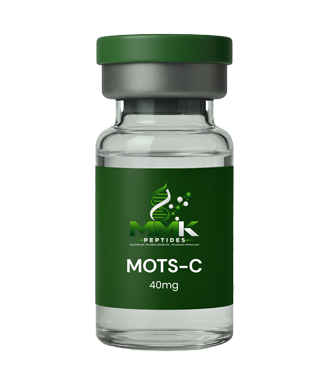
MOTS-C – 40MG
What Is MOTS-C
MOTS-C is a short peptide encoded not in the nuclear genome but within the 12S ribosomal RNA gene of mitochondrial DNA. It was first characterized in 2015 by Changhan Lee, Pinchas Cohen, and colleagues at the University of Southern California, who showed that the peptide acts as a hormone-like signal regulating whole-body metabolism. For a plain-language introduction, see our MOTS-C mitochondrial peptide guide.
In skeletal muscle, the peptide activates AMP-activated protein kinase (AMPK) and shifts cellular metabolism toward glucose uptake and fatty-acid oxidation — the same program switched on by exercise and caloric restriction. That overlap is why the literature so often describes it as an “exercise mimetic.”
Key Research Applications
· AMPK pathway activation: A tool compound for studying the master energy sensor that governs glucose uptake, lipid oxidation, and mitochondrial biogenesis.
· Exercise-mimetic research: The peptide reproduces several molecular adaptations of physical training, making it useful in models of metabolic adaptation and endurance.
· Insulin sensitivity models: Published work shows improved insulin sensitivity and glucose homeostasis in diet-induced insulin-resistance models.
· Aging and longevity biology: Circulating levels decline with age, so researchers buy MOTS-C to probe age-related metabolic and muscular decline.
· Mitochondrial-nuclear communication: Under metabolic stress the peptide translocates to the nucleus and regulates nuclear gene expression — a rare window into inter-organelle signaling.
$59.00